Kashmir Itinerary from Ahmedabad: 5, 7 & 10 Days Complete Guide (2026)
Kashmir is the destination that every Ahmedabad traveller talks about on the way home from every other trip. While you are on the houseboat in Alleppey or watching the sunset at Udaipur, someone always says it “we should do Kashmir next.” And then, somehow, the next trip is Thailand or Dubai again.
This guide is for the Ahmedabad traveller who is finally ready. The one who wants to know exactly how to get there, what it actually costs, what each destination looks and feels like, and which season to go in. Not a generic Kashmir travel guide recycled for every city in India — a specific, honest itinerary built around flying from Sardar Vallabhbhai Patel International Airport, covering vegetarian and Jain food options throughout the valley, aligning with Gujarati school holidays and festival calendars, and giving you the depth of information that transforms Kashmir from a vague dream into a confirmed booking.
Here is everything.
Ready to skip straight to booking? Explore our Kashmir tour package from Ahmedabad, customised 5, 7, and 10-day itineraries with direct flights, Dal Lake houseboats, and private vehicles throughout.
Why Kashmir Is Ahmedabad’s Most Underbooked Great Destination?
Ahmedabad travellers disproportionately book international destinations over Kashmir, and the numbers reveal something counterintuitive. The flight from Ahmedabad to Srinagar takes 2 hours 10 minutes direct on IndiGo or SpiceJet. That is faster than Bangalore, shorter than Kochi, and vastly quicker than any international destination. A return flight costs ₹10,000–₹18,000 per person depending on season, less than Bangkok, less than Dubai, less than the Maldives.
What you get at the destination cannot be replicated anywhere else, a valley ringed by Himalayan peaks, a lake city with floating gardens and wooden houseboats, meadows above the treeline where the grass is greener than anything in Gujarat, a living culture of warmth, craftsmanship, and cuisine that has been shaped by Persian, Central Asian, and Mughal influences for 600 years.
Kashmir is not a compromise destination. It is a world-class one. The gap between how many Ahmedabad families visit it and how many should is a planning gap, not an enthusiasm gap. This blog closes that gap.
The Four Destinations Every Kashmir Itinerary Is Built Around
Before any itinerary, understand what each destination actually offers. Every Kashmir trip is a combination of these four places in different proportions and durations.
Srinagar: The Heart of Kashmir
Srinagar is the capital of Jammu and Kashmir and the base for every Kashmir trip. At 1,585 metres above sea level, it sits in the broad Kashmir Valley encircled by mountains. The city is built around two lakes, Dal Lake and the quieter, deeper Nigeen Lake, and its old city along the Jhelum river bank is one of the most characterful urban environments in India.
Dal Lake is the defining image of Kashmir, 18 square kilometres of water connected by channels to the floating gardens that local communities have been cultivating on the lake surface for centuries. The Shikara ride (a flat-bottomed wooden boat, traditionally carved and painted, propelled by a heart-shaped paddle) across Dal Lake at dawn, past the floating vegetable markets and flower sellers, is the experience most Kashmir visitors say they remember most vividly.
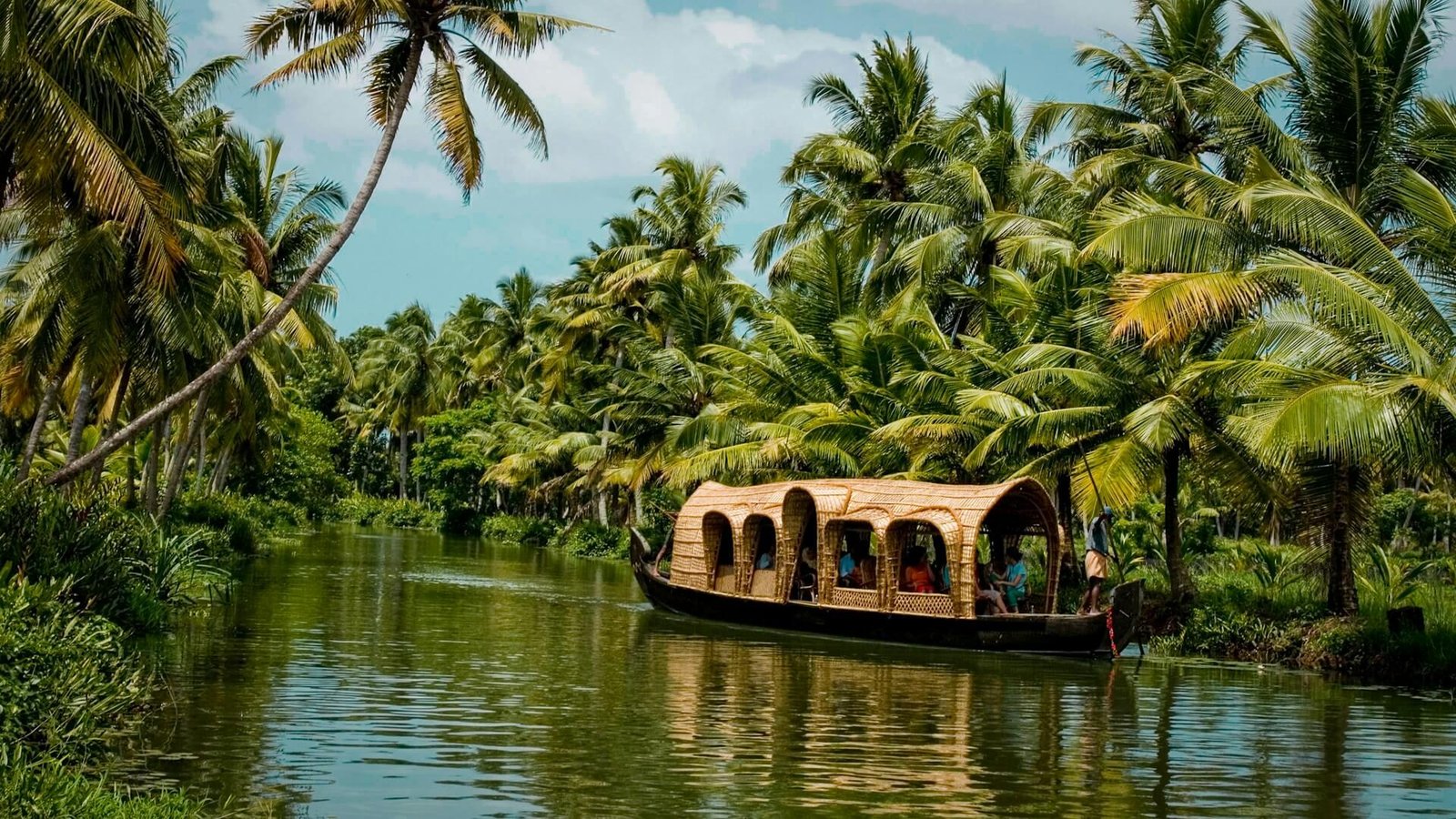
Houseboats on Dal Lake are Kashmir’s signature accommodation, wooden two-storey boats moored along the lake’s edges and channels, furnished with carved walnut panels, hand-knotted rugs, and copper samovars, with kitchen and crew on board. Staying on a houseboat is not just an accommodation choice, it is the immersive Kashmir experience. More on this in the travel tips section.
The Mughal Gardens, Shalimar Bagh (1619 AD), Nishat Bagh (1633 AD), and Chashme Shahi (1632 AD), are stepped terraced gardens built by Mughal emperors on the slopes above Dal Lake, drawing water from Himalayan streams through a series of fountains and channels. They are extraordinary in spring (April–May) when the flowers are at their peak.
Indira Gandhi Memorial Tulip Garden, Asia’s largest tulip garden, with 1.5 million tulips across 30 varieties blooming for three weeks in late March to mid-April. This is one of India’s most genuinely spectacular seasonal spectacles and a major reason to time your trip for spring.
Shankaracharya Temple, a Hindu temple perched at 1,100 feet above the city on a rocky hill, believed to date to 220 BC, with panoramic views over Srinagar, Dal Lake, and the surrounding mountains. One of Kashmir’s most significant Hindu pilgrimage sites.
Old Srinagar and the floating markets, the old city’s timber-framed houses along the Jhelum riverbank, the Shah-e-Hamdan mosque (a 14th-century wooden mosque rebuilt in 1731), and the vegetable market held on Dal Lake from wooden boats at 6am are all experiences that reveal a Srinagar most tourists miss entirely.
Gulmarg: The Meadow of Flowers
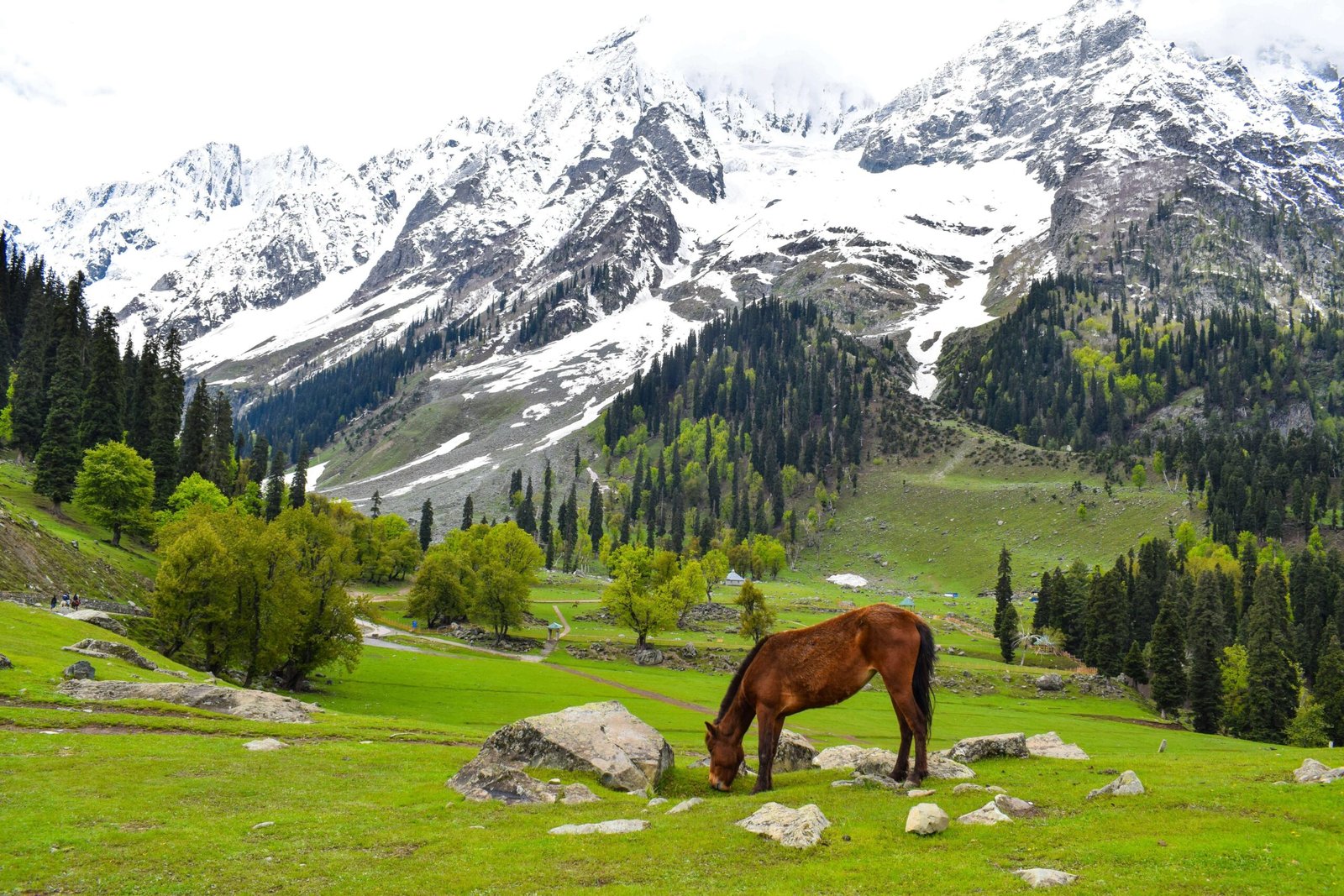
Gulmarg sits at 2,650 metres, 52km west of Srinagar through a mountain valley that narrows dramatically before opening into the wide bowl of the meadow. It is one of the world’s great alpine destinations, in winter, the best skiing in Asia outside Central Asia; in summer, meadows of wildflowers surrounding one of the world’s highest golf courses; year-round, the Gulmarg Gondola providing access to views at 3,747 metres that reveal the Himalayan range in a way that few places on earth allow without trekking.
Gulmarg Gondola, a two-phase cable car system, the highest in Asia. Phase 1 reaches Kongdoori Mountain at 3,050 metres in 8 minutes. Phase 2 continues to Apharwat Ridge at 3,747 metres, with views across Pakistan-administered Kashmir, the Nanga Parbat massif, and the Himalayan range that on a clear day are simply indescribable. In winter (December–February), Phase 2 is the access point for the ski slopes. In summer, it reveals a world above the treeline that is accessible without trekking. Gondola tickets in 2026 are approximately ₹900 per person (Phase 1) and ₹1,600 per person (Phase 2) advance booking online is strongly recommended as queues can be 2–3 hours in peak season.
Biking and pony rides in the meadow, the broad alpine meadow at Gulmarg is traversable on foot, horse, or bicycle. The routes through the meadow reveal the full encircling ring of peaks (Nanga Parbat at 8,126 metres visible on clear days) that make this one of the most dramatic mountain panoramas in India.
Skiing and winter activities, Gulmarg’s ski season runs December to February. The terrain is challenging (primarily intermediate to advanced), the snow quality is excellent (dry powder rather than wet snow), and the infrastructure has improved significantly in recent years. Beginner ski courses with equipment rental and instruction are available for first-timers. This is one of the few places in India where a proper alpine ski holiday is possible.
Pahalgam: The Valley of Shepherds
Pahalgam sits at 2,130 metres, 95km southeast of Srinagar in the Lidder River valley, surrounded by dense pine forests, apple orchards, and meadows through which the clear Lidder flows over large rounded boulders. It is quieter, greener, and more pastoral than either Srinagar or Gulmarg a destination for travellers who want to slow down rather than tick off sightseeing boxes.
Betaab Valley, named after the Bollywood film shot here in 1983, a meadow ringed by pine forests 15km from Pahalgam with a mountain stream and alpine scenery that exemplifies why Kashmir is called “paradise on earth.”
Aru Valley, a smaller, quieter valley 12km from Pahalgam, the starting point for trekkers heading toward the Kolhoi Glacier. In summer, the meadows around Aru are grazed by Bakarwal nomad herds and the combination of meadow, glacier views, and Bakarwal camp life is extraordinary.
Baisaran (Mini Switzerland), a meadow at 2,530 metres accessible only on horseback or foot from Pahalgam (4km each way), often called “Mini Switzerland” for the combination of open meadow, dense pine forest, and Himalayan backdrop. It earns the comparison. Pony rental from Pahalgam: approximately ₹600–₹800 per person one-way.
Chandanwadi and Sheshnag, for those visiting Kashmir during the Amarnath Yatra season (July–August), Pahalgam is the starting base for the pilgrimage route to the Amarnath Cave Temple. Even non-pilgrims find the Chandanwadi glacier (16km from Pahalgam) a spectacular half-day excursion.
Sonamarg: The Meadow of Gold
Sonamarg at 2,740 metres is the most remote and dramatically mountain-framed of the four main Kashmir destinations, 87km northeast of Srinagar along the Sindh River valley, with the Himalayan range visible in every direction. The name means “Meadow of Gold” the meadow glows a rich golden-green in autumn (September–October) when seen against the blue sky and white peaks.
Thajiwas Glacier, the main excursion from Sonamarg, a 3km walk or pony ride from the town through pine forest to a glacier that hangs between two ridges. In summer (May–October), the glacier is accessible and the ice and meltwater streams provide a genuinely surreal landscape at 3,000+ metres. In winter, the entire valley is snow-covered and accessible only by snowmobile or on foot.
Zoji La pass views, Sonamarg is 10km from the Zoji La, the 3,528-metre mountain pass that connects Kashmir to Ladakh. The views from the road toward Zoji La reveal the dramatic transition from the green Kashmir Valley to the high-altitude moonscape of Ladakh, one of India’s most striking geological contrasts.
The Z-Morh Tunnel, inaugurated in January 2025, this 6.4km all-weather tunnel through the mountain connecting Sonamarg to Gagangir has made Sonamarg accessible year-round for the first time. Previously, Sonamarg was cut off from November to May. This is the single biggest infrastructure change to Kashmir tourism in a decade, Sonamarg in winter, carpeted in deep snow with the Thajiwas Glacier fully iced over, is now a destination that Ahmedabad travellers can visit from December to February as part of a Kashmir winter trip.
Kashmir Itinerary for 5 Days from Ahmedabad: The Essential First Visit
Five days is the minimum for a meaningful Kashmir trip and enough for the core circuit, Srinagar, Gulmarg, and Pahalgam, with a houseboat night on Dal Lake. This is the most popular Kashmir itinerary for Ahmedabad travellers on limited leave.
Day 1: Fly Ahmedabad to Srinagar + Dal Lake Shikara + Houseboat Check-In
Fly from Ahmedabad (AMD) to Srinagar (SXR). Direct flights on IndiGo and SpiceJet take 2 hours 10 minutes. IndiGo operates this route daily with morning and afternoon departures. SpiceJet also operates the route on selected days. Air India flies via Delhi (total journey time 4.5–5 hours). For the direct option, round-trip fares range from ₹10,000–₹18,000 per person depending on how far in advance you book and the travel season, April to August being the most expensive.
Srinagar Airport (officially Sheikh ul-Alam International Airport) is 14km from the city centre, approximately 30–40 minutes by taxi. On landing, the valley hits you immediately, the combination of mountain walls on every horizon and the scent of pine, saffron, and cool Himalayan air is unlike anything in Gujarat or most of India.
Check into your houseboat on Dal Lake. Afternoon: first Shikara ride across the lake. Go at the end of the afternoon when the light is long and gold and the mountains around the lake are at their most theatrical. This first Dal Lake Shikara, crossing the floating gardens, passing the chilli and lotus sellers in their little boats, watching the houseboats’ wooden facades reflected in the still water, is the moment most travellers realise why Kashmir is called Paradise on Earth.
Evening on the houseboat. Kashmiri dinner served by the crew: Rogan Josh (slow-cooked lamb in aromatic gravy), Dum Aloo Kashmiri (baby potatoes in red chilli and yogurt gravy, excellent for vegetarians), Haak (a leafy green braised with asafoetida), and rice. Finish with kahwa, saffron, cardamom, cinnamon, and almond-flaked green tea served in copper cups, the flavour of Kashmir in liquid form.
Vegetarian and Jain note: Kashmiri cuisine is predominantly non-vegetarian (the culture has historically been Shaivite Hindu and Muslim, both without the strict vegetarianism common in Gujarat). However, Kashmiri vegetarian food, Dum Aloo, Rajma, Haak, Nadru (lotus stem) dishes, is genuinely excellent. Most houseboat operators and hotels can prepare pure vegetarian meals. Jain meals without onion and garlic require advance notice of 24–48 hours and are available from experienced operators including Tour De Holidays. Always confirm this at booking.
Day 2: Srinagar Full Day: Mughal Gardens + Old City + Dal Lake Dawn
Wake early for the optional Dal Lake dawn experience, the floating vegetable market operates from 5am to 7am, when farmers from the floating gardens bring their produce to market in shikaras. This is one of the most atmospheric morning scenes in India and worth the early alarm.
After breakfast: Mughal Gardens circuit. Shalimar Bagh, the largest and most formal of the three Mughal gardens, built by Emperor Jahangir in 1619 for his queen Nur Jahan. Four terraced levels descending to the lake, with chinar trees lining the central canal. Nishat Bagh, built in 1633, 12 terraced levels on a steeper slope, views directly across Dal Lake to the Kashmir Valley. Chashme Shahi, the smallest garden, built around a natural spring said to be medicinal, in a peaceful forest setting above Nishat.
Afternoon: Old Srinagar walk. The narrow lanes of the old city along the Jhelum riverbank, the Shah-e-Hamdan mosque’s extraordinary carved cedar interior (one of the finest pieces of Kashmiri woodcarving in existence), and the Pathar Masjid. Shankaracharya Temple if you are comfortable with the climb.
Evening: Lal Chowk (the main commercial square) and the handicraft shops of Residency Road, Kashmiri handicrafts are among India’s finest: hand-knotted silk carpets, Pashmina shawls (genuine Pashmina from Changthangi goats, not the machine-made imitations sold throughout India), papier-mâché boxes and vases, walnut wood carvings, and copper and silverwork.
Day 3: Drive to Gulmarg + Gondola Ride + Return to Srinagar
Early morning drive to Gulmarg, 52km, approximately 1.5 hours through the mountain valley. The road climbs from the Kashmir floor through pine forest and then the last 10km on a narrow mountain road to the meadow. Arrive before 9am to catch the gondola before peak-hour queues (which can reach 90 minutes at 11am in summer).
Phase 1 Gondola to Kongdoori (3,050 metres): sweeping views over the Gulmarg meadow, Srinagar in the valley below, and the Himalayan wall beyond. In winter this is the ski run access; in summer the slopes are green and dotted with wildflowers.
Phase 2 Gondola to Apharwat Ridge (3,747 metres): on a clear day the view from here, Nanga Parbat, the Nun-Kun massif, and the ranges extending into Pakistan, is the finest accessible mountain panorama in India below Ladakh’s elevation. The air at this altitude feels noticeably thinner than the valley (you are at 12,300 feet above sea level). Mild altitude symptoms (light headache, slight breathlessness) are normal and resolve within 30 minutes of descending. Stay hydrated.
Afternoon: meadow walk, pony ride, or photography along the Gulmarg bowl. Lunch at one of the meadow dhabas. Return to Srinagar by evening.
Day 4: Drive to Pahalgam + Betaab Valley + Aru Valley
Drive from Srinagar to Pahalgam, 95km, approximately 2.5 hours through the Lidder River valley. The road follows the river through apple orchards, poplar-lined avenues, and gradually climbing forested hills.
Check into your Pahalgam hotel (most are set along the river, with the Lidder audible from the rooms). Morning: Betaab Valley, drive 15km upstream to the famous meadow, walk through the pine forest, and spend an hour at the river and meadow. Afternoon: Aru Valley, 12km in the opposite direction, quieter, with views toward the Kolhoi Glacier. Pony ride to Baisaran (Mini Switzerland) at 2,530 metres if energy allows, the meadow at Baisaran against the Himalayan backdrop in the afternoon light is one of Kashmir’s most photographed scenes.
Evening: Pahalgam market for dried fruits (Kashmiri walnuts, dried apricots, and almonds are excellent), saffron (verify authenticity, real Kashmiri saffron is deep crimson, not orange), and local handicrafts.
Day 5: Pahalgam → Return Srinagar → Flight Home
Morning at leisure in Pahalgam. The Lidder River at dawn, with mist rising from the water and pine forest silent on both banks, is one of the most peaceful scenes in all of Kashmir. Drive to Srinagar (2.5 hours). Afternoon: any remaining Srinagar shopping or sightseeing. Transfer to Srinagar airport for your evening flight back to Ahmedabad (arrives by 9–10pm on a direct flight).
Kashmir Itinerary for 7 Days from Ahmedabad: The Complete Classic
Seven days is the most satisfying Kashmir itinerary, enough time at each destination to genuinely feel the place rather than just photograph it, with the addition of Sonamarg for the most dramatic mountain scenery in the valley.
Day 1: Arrive Srinagar + Houseboat Check-In + Dal Lake Shikara
Arrive Srinagar, check into houseboat on Dal Lake. Afternoon Shikara ride, dinner on board. As described in the 5-day itinerary.
Day 2: Srinagar: Mughal Gardens + Old City + Floating Market Dawn
Full Srinagar sightseeing day with the 5am floating market dawn visit. As described in the 5-day itinerary. Mughal Gardens, Shankaracharya Temple, old city walk, handicraft shopping.
Day 3: Day Trip to Sonamarg + Return to Srinagar
Drive from Srinagar to Sonamarg, 87km, approximately 2.5 hours along the Sindh River valley. This is one of India’s great scenic drives, the valley narrows and the mountain walls rise dramatically as you approach Sonamarg, with glacial streams crossing the road and the treeline progressively thinning.
Arrive Sonamarg late morning. Pony ride or walk to Thajiwas Glacier (3km each way, 1.5–2 hours). The glacier is accessible from May to October. In winter (now year-round accessible via Z-Morh Tunnel), the valley is completely snow-covered and the glacier is a seamless extension of the snow landscape.
The Z-Morh Tunnel (opened January 2025) has changed Sonamarg access permanently, mention this to any travel agent who has not updated their standard itinerary. Before the tunnel, Sonamarg was inaccessible from November to May. It is now a year-round destination.
Return to Srinagar by evening. Second night on the houseboat.
Day 4: Drive to Gulmarg + Gondola + Afternoon in Meadow
Full Gulmarg day as described in the 5-day itinerary. Leave Srinagar early, Phase 1 and Phase 2 Gondola, meadow afternoon, return to Srinagar by evening. Third night on houseboat or transfer to a hotel.
Day 5: Drive to Pahalgam: Betaab Valley + Aru Valley
Drive to Pahalgam (2.5 hours). Betaab Valley and Aru Valley as described in the 5-day itinerary. Stay overnight in Pahalgam — the extra night here versus the 5-day itinerary makes a significant difference. Pahalgam at dusk and dawn, without the need to rush back to Srinagar, reveals a completely different, quieter side of the destination.
Day 6: Pahalgam: Baisaran + Chandanwadi + River Walk
With a full day in Pahalgam (unlike the 5-day rush), you can do more. Morning: pony ride to Baisaran (Mini Switzerland), the 4km each way trail through pine forest, arriving at the high meadow with the full Himalayan backdrop. Afternoon: Chandanwadi (16km from Pahalgam, accessible by taxi) — the road ends here and the Amarnath Yatra trek begins. Even for non-pilgrims, the glacial scenery at Chandanwadi is extraordinary. The Pahalgam Golf Course, a 9-hole course laid in a mountain meadow at 2,100 metres, said to be one of the world’s most scenic, for the golfers.
Evening: Pahalgam riverfront. The town’s night market in season is excellent for dried fruit purchases.
Day 7: Pahalgam → Srinagar → Flight Home
Morning river walk in Pahalgam. Drive to Srinagar (2.5 hours). Final Dal Lake Shikara if time allows before airport transfer. Flight from Srinagar to Ahmedabad (2h 10m direct, arriving home by evening or night).
Kashmir Itinerary for 10 Days from Ahmedabad: The Complete Valley Experience
Ten days allows you to go beyond the standard circuit and discover the Kashmir most tourists miss, the offbeat valleys of Yusmarg and Doodhpathri, the Wular Lake wetlands, the ancient temples of Martand and Avantipur, and enough time at each major destination to feel genuinely unhurried. This is the itinerary for Ahmedabad travellers who want to come back knowing they’ve actually experienced Kashmir rather than visited its highlights.
Day 1 — Arrive Srinagar + Houseboat + Dal Lake Evening
Arrive, check in to Dal Lake houseboat, afternoon Shikara, dinner on board. As described.
Day 2 — Srinagar: Mughal Gardens + Floating Market + Old City
Full Srinagar cultural day, including 5am floating market, Mughal Gardens, Shankaracharya Temple, Shah-e-Hamdan mosque, old city walk. As described.
Day 3 — Doodhpathri Day Trip + Srinagar Evening
Doodhpathri (literally “Valley of Milk”) is 42km southwest of Srinagar, a high alpine meadow at 2,730 metres that receives a fraction of Gulmarg’s visitors despite being equally beautiful. Named for the white frothy streams that cross the meadow, Doodhpathri is a landscape of wildflower meadows, silver birch forest, and glacial streams with the Pir Panjal range visible above. No gondola, no ski resort infrastructure, just open meadow and Himalayan silence. An ideal half-day trip for families with young children who want natural beauty without altitude stress.
Return to Srinagar by afternoon. Evening at leisure, second night on houseboat.
Day 4 — Drive to Sonamarg: Thajiwas Glacier + Sindh Valley
Full Sonamarg day as described in the 7-day itinerary. The Sindh River valley drive, Thajiwas Glacier, Sonamarg meadow, return to Srinagar evening. This is the most dramatically mountain-framed day of any Kashmir itinerary.
Day 5 — Gulmarg: Gondola + Meadow
Full Gulmarg day as described. Phase 1 and Phase 2 Gondola, meadow exploration. Return to Srinagar evening.
Day 6 — Ancient Temples Day: Martand + Avantipur + Pampur Saffron Fields
This day is the one most tourists skip and the one that most enriches a Kashmir trip for historically interested travellers. Drive east from Srinagar through the Kashmir Valley floor.
Avantipur (30km from Srinagar), ruins of two large Hindu temples built in the 9th century by King Avantivarman, intricately carved from local stone and now partially excavated. The scale of the ruined temple complex gives a sense of the pre-Islamic cultural heritage of Kashmir.
Pampur, the centre of Kashmiri saffron production. The saffron fields (most vivid in October–November when the purple flowers bloom) are surrounded by traditional Kashmiri farmhouses. Purchase saffron directly from certified farmers, genuine Kashmiri saffron (the finest grade of saffron in the world) costs approximately ₹250–₹350 per gram at source. The same quantity costs ₹400–₹600 in Srinagar shops and more than double in Gujarat markets.
Martand Sun Temple, the most architecturally significant pre-Islamic site in Kashmir, a ruined 8th-century Hindu temple to the sun god Martand built on a dramatic plateau with views across the entire Kashmir Valley. The temple was largely destroyed in the 15th century but the colonnade and main shrine walls survive, revealing the scale and sophistication of Kashmiri temple architecture before the Islamic period.
Return to Srinagar evening.
Day 7 — Drive to Pahalgam: Aru Valley + Lidder River
Drive to Pahalgam (2.5 hours). Afternoon Aru Valley walk. Overnight Pahalgam.
Day 8 — Pahalgam Full Day: Baisaran + Chandanwadi + Betaab Valley
Full active Pahalgam day. Baisaran meadow pony ride (morning), Chandanwadi glacial scenery (afternoon), Betaab Valley evening walk. As described in the 7-day itinerary.
Day 9 — Yusmarg Day Trip from Pahalgam (via Srinagar)
Drive from Pahalgam toward Srinagar, then west to Yusmarg — a completely different alpine meadow from any of the other Kashmir destinations. At 2,350 metres in the Pir Panjal foothills 47km west of Srinagar, Yusmarg is reached through dense pine and fir forest. The meadow is wide, treeless, and encircled by mountains — less dramatic than Gulmarg in terms of peak visibility but extraordinarily peaceful, with almost no commercial development. Horse riding across the meadow and picnicking by the Doodh Ganga river are the activities here. This is where Kashmiris themselves come for family picnics on weekends, which tells you everything about its character.
Return to Srinagar evening. Last night in the city, final houseboat night if available.
Day 10 — Final Srinagar Morning + Departure
Slow final morning on the lake. Final Shikara at dawn. Any remaining shopping in Lal Chowk or Residency Road. Airport transfer. Flight home to Ahmedabad.
Flights from Ahmedabad to Srinagar: Everything You Need to Know
Direct flights: IndiGo and SpiceJet both operate direct AMD–SXR flights with a journey time of 2 hours 10 minutes. This is the best option, no layover stress, arrives in Srinagar by mid-morning if you take an early Ahmedabad departure, and allows a full first day in the valley.
Connecting flights: Air India (via Delhi), IndiGo (via Delhi or Chandigarh). Total journey time 4.5–5.5 hours depending on connection. These are the best fallback when direct flights are not available or are priced significantly higher.
Flight frequency: Approximately 18+ flights daily operate AMD–SXR (direct and connecting combined). Direct flights operate most days of the week with 1–2 departures per day.
Best booking window: Book 6–8 weeks in advance for April–June (peak spring and summer season). Book 8–10 weeks in advance for December–January (peak winter/snow season). The cheapest months to fly AMD–SXR are November and February, shoulder season between peak demand windows.
Round-trip fare guide:
- Budget (off-peak, advance booking): ₹10,000–₹13,000 per person
- Standard (4–6 weeks advance): ₹13,000–₹18,000 per person
- Peak season (April–June, December–January): ₹18,000–₹28,000 per person
Important: Srinagar airport operates with additional security protocols. Arrive 2.5 hours before departure rather than the standard 2 hours. All check-in bags are opened and physically inspected at Srinagar security. Build this time into your day’s plan.
Kashmir Trip Cost from Ahmedabad: Honest 2026 Breakdown
| Component | Budget | Mid-Range | Premium |
|---|---|---|---|
| Return Flights AMD–SXR (per person) | ₹11,000 | ₹15,000 | ₹22,000 |
| Dal Lake Houseboat (per night, per room) | ₹2,500 | ₹5,000 | ₹12,000+ |
| Hotel Srinagar/Pahalgam/Gulmarg (per room) | ₹1,500 | ₹3,500 | ₹8,000 |
| Private vehicle (per day, AC Innova) | ₹3,000 | ₹4,000 | ₹5,500 |
| Gulmarg Gondola Phase 1 (per person) | ₹900 | ₹900 | ₹900 |
| Gulmarg Gondola Phase 2 (per person) | ₹1,600 | ₹1,600 | ₹1,600 |
| Daily meals (per person) | ₹400 | ₹800 | ₹1,800 |
| Pony rides, Shikara, activities | ₹1,500 | ₹3,000 | ₹6,000 |
| Total (per person, 7 days incl. flights) | ₹28,000 | ₹45,000 | ₹85,000+ |
A mid-range 7-day Kashmir trip for 2 persons from Ahmedabad costs approximately ₹85,000–₹95,000 total, including return flights for two, 2 houseboat nights, 4 hotel nights, private vehicle, daily breakfast, Gondola tickets, Shikara rides, and activities. This is less than a 5-day international trip to Thailand or Dubai and delivers experiences with no international equivalent.
Best Time to Visit Kashmir from Ahmedabad: Complete Season Guide
Kashmir has four distinct seasons and each offers a genuinely different experience. Here is the honest guide for Ahmedabad travellers:
Spring: March to May: Tulips, Snow and Perfect First Visits
March–April is the strongest recommendation for first-time Kashmir visitors from Ahmedabad. The Indira Gandhi Memorial Tulip Garden is open (late March to mid-April, Asia’s largest tulip display, 1.5 million tulips across 30 varieties). Gulmarg still has snow, the Gondola reaches snow-covered slopes and Phase 2 views are clear. Pahalgam’s meadows are fresh green. Sonamarg is accessible. Temperatures in Srinagar are 12–20°C (ideal for sightseeing). Houseboat stays on Dal Lake are at their most atmospheric. Mughal Gardens are in bloom. Crowds are significantly lower than peak summer.
May is the transition into summer, meadows at their greenest, all activities fully operational, temperatures rising to 20–28°C in Srinagar. Good for families. More crowded than March–April.
For Ahmedabad travellers: The period around Akshaya Tritiya (April–May) and Eid festivals often sees booking spikes. Book 6–8 weeks ahead for spring travel.
Summer: June to August: Peak Season for Families
Summer is Kashmir’s peak tourist season, schools are out across India, every road and attraction is fully operational, the meadows of Gulmarg and Pahalgam are at maximum green, and the long days give you the most sightseeing time. Temperatures in Srinagar reach 28–33°C (cool evenings 15–18°C), Gulmarg 18–25°C, Pahalgam 20–26°C.
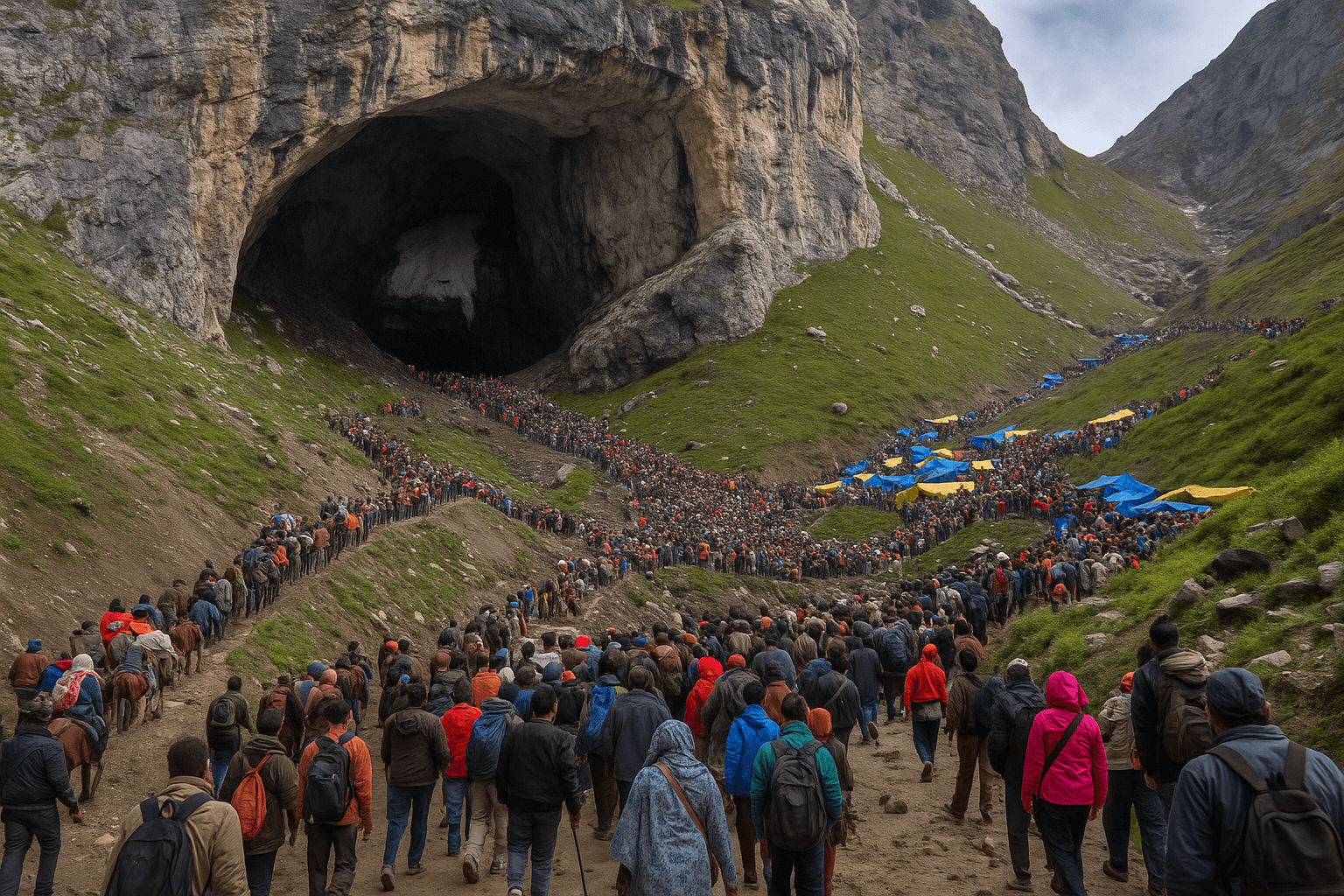
July and August are Amarnath Yatra months, the high-altitude pilgrimage to the Amarnath Cave Temple brings hundreds of thousands of pilgrims through Pahalgam and Baltal. If your itinerary includes Pahalgam, be aware of the Yatra crowds and road congestion. The Yatra itself the sight of hundreds of thousands of devotees moving through mountain terrain — is one of India’s most powerful religious spectacles.
For Ahmedabad travellers: Summer school holidays (May–June) are the most popular Kashmir window for Gujarati families. Book 8–10 weeks ahead. This is the most expensive window of the year.
Autumn: September to November: The Hidden Gem Season
Autumn is Kashmir’s most underrated season for Ahmedabad travellers and the one that deserves significantly more bookings than it currently gets. The chinar trees — the broad-canopied plane trees that line the roads and gardens of Srinagar and the valleys of Pahalgam — turn gold, amber, and deep red from mid-October. The combination of golden chinar forests, the harvest colours of apple orchards, mist rising from Dal Lake in the mornings, and post-monsoon clear mountain air produces a Kashmir that is arguably more photogenic than any other season.
Temperatures are comfortable (Srinagar 10–22°C in October), crowds thin dramatically from September onwards, and hotel rates fall 20–40% below summer peaks. Sonamarg from September to November, before significant snowfall, is extraordinary.
For Ahmedabad travellers: The Navratri and Diwali windows (October–November) align perfectly with Kashmir’s autumn peak. This is the best-value season for Ahmedabad travellers who can travel outside school holiday constraints. Book 4–6 weeks ahead.
Winter: December to February: Snow, Skiing and Silence
December to February transforms Kashmir into a completely different destination. Dal Lake partially freezes (the sight of the houseboats surrounded by ice in January is one of India’s most surreal images). Gulmarg receives 3–5 metres of snow and the ski season runs at full capacity. Sonamarg (now accessible via Z-Morh Tunnel year-round) is entirely snow-covered. Pahalgam’s forests are white and quiet.
Srinagar in winter is cold but functional, 0–8°C during the day, -2°C to -5°C at night. The bukhari (traditional Kashmiri central heating stove burning charcoal, with a wicker frame placed over it as a radiator that people wrap themselves around) is the authentic Kashmir winter experience, every houseboat and traditional home has one.
For Ahmedabad travellers: The Christmas–New Year window and the period around Makar Sankranti (January 14) are popular Kashmir winter travel windows. Gulmarg skiing is the specific draw for winter travel. Pack properly: thermal base layers, heavy jacket (rated to -10°C minimum), waterproof boots, gloves, and a warm hat are all essential.
Month-by-month summary for Ahmedabad:
| Month | Season | Temperature (Srinagar) | What’s Special | Crowds | Cost |
|---|---|---|---|---|---|
| March | Spring | 8–18°C | Tulip Garden opens (late March) | Low | Medium |
| April | Spring | 12–20°C | Tulip Festival peak, best first visit | Medium | Medium |
| May | Late Spring | 16–26°C | Full green meadows, school holidays | High | High |
| June | Summer | 22–32°C | Peak season, all activities | Very High | Very High |
| July | Summer | 24–33°C | Amarnath Yatra, lush green | Very High | Very High |
| August | Summer | 22–31°C | Monsoon light rain, still beautiful | High | High |
| September | Autumn | 16–26°C | Post-monsoon clarity, fewer crowds | Medium | Medium |
| October | Autumn | 10–22°C | Chinar gold, apple harvest, Navratri | Low | Medium |
| November | Late Autumn | 4–14°C | Early snow at high altitudes | Very Low | Low |
| December | Winter | 0–8°C | Snow begins, skiing starts, Z-Morh accessible | Low | Medium |
| January | Peak Winter | -2–5°C | Gulmarg ski season peak, Dal Lake freeze | Medium | High |
| February | Late Winter | 0–10°C | Best snow, almond blossom begins | Medium | High |
Houseboat Stay on Dal Lake: The Complete Ahmedabad Traveller’s Guide
The Dal Lake houseboat is not just accommodation, it is the definitive Kashmir experience. Here is everything you need to know before booking.
What a houseboat actually is: A traditional Kashmiri wooden houseboat, typically 20–25 metres long, moored along the shores or channels of Dal Lake or Nigeen Lake. Most houseboats have 3–5 bedrooms (each with attached bathroom), a living room with carved walnut furniture and traditional Kashmiri decor, a front deck for sitting and watching the lake, and a separate kitchen boat where the crew prepares meals.
Categories and pricing (2026):
- Deluxe/Budget: ₹2,000–₹3,500 per room per night — basic comfort, functional bathrooms, standard meals
- Standard: ₹3,500–₹6,000 per room per night — better furnishings, hot water, good meals
- Superior/Heritage: ₹6,000–₹10,000 per room per night — carved interiors, excellent food, attentive service
- Luxury/5-Star floating: ₹12,000–₹25,000 per room per night — highest quality furnishings, butler service, premium meals
What to look for when booking: Avoid booking a houseboat through a random tout at the airport or on the street, this is the single most common mistake by Kashmir first-timers. Book through a reputable agency (Tour De Holidays, your travel package operator) who has verified the specific houseboat. Ask for: a confirmed booking document with the houseboat name and owner’s contact, photos of the actual houseboat (not stock images), and a clear price that includes all meals and Shikara transfers.
Nigeen Lake vs Dal Lake: Nigeen Lake is smaller, quieter, and less commercialised than Dal Lake. The houseboats here are more private, the water is cleaner, and the morning atmosphere is calmer. For couples and those prioritising peace, Nigeen is worth the slight additional distance from city sightseeing. Dal Lake offers more activity, more Shikara traffic, and the famous floating vegetable market proximity. For families and first-timers, Dal Lake’s atmosphere is more immediately Kashmir-iconic.
Vegetarian meals on houseboats: Most houseboat operators can prepare excellent Kashmiri vegetarian food, Dum Aloo, Rajma, Haak, Nadru. Jain meals require advance notice. Confirm this at booking through Tour De Holidays for all Kashmir packages.
Travel Tips for Ahmedabad Travellers Visiting Kashmir
Connectivity: Jio, Airtel, and BSNL all work in Srinagar, Gulmarg, and Pahalgam. Mobile data coverage in the valleys is generally good. Sonamarg has patchy coverage. Very remote areas (Gurez Valley, Lolab Valley) may have no signal. Download offline Google Maps for Kashmir before travel.
Cash: Carry sufficient cash from Ahmedabad. While ATMs exist in Srinagar and major towns, they sometimes run out in peak season. Many houseboat operators, Shikara wallahs, and smaller establishments in Pahalgam and Gulmarg prefer cash. Take ₹15,000–₹20,000 in cash for a 7-day trip beyond your digital payment options.
Clothing by season: Summer (May–August): light clothes for daytime (25°C+) with a fleece for evenings (it drops to 12–15°C after sunset in Srinagar, colder in Gulmarg and Pahalgam). Carry a light waterproof jacket for afternoon showers. Spring/Autumn: medium layers (15–20°C days, 5–10°C evenings). Winter: heavyweight thermal layers, a jacket rated to at least -10°C for Gulmarg, waterproof snow boots, gloves, and a warm hat. Do not underestimate the cold, Gulmarg in January is properly Arctic.
Altitude: Gulmarg Phase 2 (3,747 metres) is the highest point most Kashmir tourists visit. Mild altitude symptoms, slight headache, shortness of breath, are normal and resolve on descent. People with cardiac conditions should consult a doctor before taking Phase 2. Most visitors are fine with adequate hydration and a reasonable pace.
Food for vegetarians: Srinagar has excellent pure vegetarian restaurants in the hotel district (Boulevard Road area). Pandits Kashmiri food (the Hindu Kashmiri vegetarian tradition) is extraordinary, Kashmiri Pandit cuisine uses yogurt, anise seed, and saffron in a way unlike any other Indian cooking tradition. Ask specifically for Pandit-style cooking. In Gulmarg and Pahalgam, vegetarian food is widely available but less varied. Tour De Holidays arranges vegetarian and Jain meals throughout all Kashmir packages.
Safety: Kashmir’s major tourist destinations, Srinagar, Gulmarg, Pahalgam, Sonamarg, are safe for tourists in 2026. The valley has seen sustained improvement in its security situation over the past decade. Travel advisories from the Government of India and major tourism bodies consistently describe the Kashmir valley as safe for domestic tourists. Millions of Indians visit every year. The standard common-sense precautions (stay in established tourist areas, follow guidance from your driver and hotel, avoid politically sensitive locations) apply.
Photography: Kashmir is one of India’s most photogenic destinations. The golden hour at Dal Lake (30 minutes before sunset), the first light on Gulmarg’s snow-covered slopes, and the autumn chinar forests of Pahalgam are extraordinary subjects. Carry a wide-angle lens for the mountain panoramas and a moderate telephoto for houseboat life and market scenes.
Kashmiri handicrafts — buying guide for Ahmedabad travellers:
- Pashmina shawls: Genuine Pashmina is from Changthangi goat fibre, extraordinarily soft (softer than cashmere), and usually priced at ₹5,000–₹50,000+ for pure Pashmina (not blended). The “ring test” (pulling the shawl through a ring) is unreliable. Buy from government-certified emporia or established shops. Avoid anything priced under ₹2,000 that claims to be pure Pashmina.
- Kashmiri carpets: Hand-knotted silk or wool carpets with Persian-influenced patterns. Prices range from ₹8,000 for small wool carpets to ₹5,00,000+ for large silk pieces. Buy from shops with Geographical Indication (GI) certification. This is a significant purchase, take time.
- Saffron: Buy from certified farmers in Pampur or verified shops in Srinagar. ₹250–₹350 per gram for genuine Kashmiri saffron (the highest grade globally). Avoid saffron that looks orange rather than deep crimson.
- Walnut wood carvings: Intricate carved boxes, photo frames, and decorative items. Prices start from ₹500 for small pieces. Beautiful and authentic.
- Papier-mâché: Lightweight, colourful, and authentically Kashmiri. Excellent souvenir choice. Prices from ₹200.
Kashmir Tour Packages from Ahmedabad: What’s Included?
Tour De Holidays offers fully customised Kashmir packages from Ahmedabad for families, couples, honeymooners, and groups. Every package is built around your specific travel dates, group size, and budget, not a fixed group tour.
Standard inclusions in all Tour De Holidays Kashmir packages:
- Return AMD–SXR flights (direct, IndiGo or SpiceJet, booked simultaneously with package)
- Private AC vehicle with driver for all transfers and sightseeing throughout
- Dal Lake houseboat (Standard or Superior category based on package tier)
- Hotels in Gulmarg and Pahalgam (verified properties with good vegetarian meal options)
- Daily breakfast throughout, dinner on houseboat nights
- Gulmarg Gondola Phase 1 and Phase 2 tickets (advance booking)
- Shikara ride on Dal Lake (1 hour, included)
- Sonamarg and Doodhpathri day trip transfers (where itinerary includes)
- Vegetarian and Jain meal arrangements at all properties with advance confirmation
- 24/7 Tour De Holidays support throughout your trip
Kashmir Package Pricing Overview
| Package | Duration | Starting Price Per Person | Key Inclusions |
|---|---|---|---|
| Kashmir Classic | 5D/4N | ₹22,000 | Srinagar + Gulmarg + Pahalgam |
| Kashmir Complete | 7D/6N | ₹32,000 | Above + Sonamarg |
| Kashmir Grand | 10D/9N | ₹48,000 | Above + Doodhpathri + Yusmarg + ancient temples |
| Kashmir Honeymoon | 7D/6N | ₹38,000 | Heritage houseboat + romantic add-ons |
| Kashmir Winter Snow | 6D/5N | ₹35,000 | Srinagar + Gulmarg skiing + Sonamarg snow |
| Kashmir Family | 7D/6N | ₹32,000 | Family-oriented activities, child-friendly hotels |
Prices per person on twin sharing basis, excluding flights (add ₹12,000–₹18,000 per person for AMD–SXR return depending on season). Prices vary by season, peak summer and winter are 20–30% higher.
Explore our Kashmir tour package from Ahmedabad or call +91 9370053095 to speak with a travel expert and get a customised Kashmir quote within 4 hours.
Frequently Asked Questions: Kashmir Trip from Ahmedabad
How many days are enough for Kashmir from Ahmedabad?
7 days is ideal for a complete Kashmir trip from Ahmedabad, covering Srinagar (2 nights on Dal Lake houseboat), Sonamarg day trip, Gulmarg (1 day), and Pahalgam (2 nights). 5 days covers Srinagar, Gulmarg, and Pahalgam without Sonamarg. 10 days adds offbeat destinations including Doodhpathri, Yusmarg, the ancient temples, and the saffron fields of Pampur.
Is there a direct flight from Ahmedabad to Srinagar?
Yes. IndiGo and SpiceJet both operate direct AMD–SXR flights with a journey time of approximately 2 hours 10 minutes. IndiGo operates daily, SpiceJet on selected days. Round-trip fares from ₹10,000–₹18,000 per person for standard advance booking. Connecting flights via Delhi on Air India are available as an alternative.
What is the Kashmir trip cost for 2 persons from Ahmedabad?
A mid-range 7-day Kashmir trip for 2 persons from Ahmedabad costs approximately ₹85,000–₹95,000 total, including return flights for 2 (AMD–SXR direct), 2 nights on a Dal Lake houseboat, 4 nights in hotels, private vehicle with driver, Gondola tickets, Shikara, daily breakfast, and key sightseeing. Budget trips for 2 cost ₹55,000–₹65,000. Premium trips cost ₹1,50,000–₹2,50,000.
What is the best time to visit Kashmir from Ahmedabad?
For first-time visitors, late March to April is the strongest recommendation, Tulip Festival, snow still visible in Gulmarg, comfortable temperatures, and lower crowds than summer. For families with school-going children, May to June is the practical peak season. For couples and photographers, October is exceptional, golden chinar autumn foliage, fewer crowds, and lower prices. For snow lovers, December to February with Gulmarg skiing is the draw.
Is Kashmir safe for tourists in 2026?
Yes. Major Kashmir tourist destinations, Srinagar, Gulmarg, Pahalgam, and Sonamarg, are safe for domestic Indian tourists. Millions of Indian visitors travel to Kashmir every year. Tour De Holidays monitors advisory updates and provides guidance to all booked travellers. Travel within established tourist circuits with a reputable operator is consistently described as safe by the Government of India’s tourism bodies.
Is the Dal Lake houseboat worth it?
Absolutely, it is the most memorable accommodation experience in Kashmir and arguably one of the most distinctive overnight stays in India. Waking up to the sound of Shikara paddles on the lake, having kahwa served on the deck as the mountains appear through early morning mist, and watching the floating market pass at 6am are experiences that no hotel can replicate. Book through Tour De Holidays to avoid the common mistake of booking through airport touts and getting a low-quality or misrepresented boat.
Pahalgam or Gulmarg — which is better?
They offer completely different experiences and both deserve time. Gulmarg is about altitude drama, the gondola, the ski slopes, the mountain panoramas from 3,747 metres. Pahalgam is about valley calm, pine forests, rivers, meadows, and a slower pace. For a 7-day itinerary, include both (1 full day Gulmarg, 2 nights Pahalgam). If you can only choose one: Gulmarg for the Gondola views and mountain drama; Pahalgam for relaxation, trekking, and a more pastoral Kashmir experience.
Can Tour De Holidays arrange Jain meals throughout a Kashmir trip?
Yes, this is one of our specific areas of expertise for Ahmedabad travellers. Pure Jain meals without onion, garlic, and root vegetables are confirmed at every houseboat, hotel, and restaurant in our Kashmir itineraries with 48 hours advance notice. Most tour operators and OTAs cannot guarantee this because they don’t have direct relationships with the specific properties in the itinerary. We do.
What is Sonamarg’s Z-Morh Tunnel and why does it matter?
The Z-Morh Tunnel is a 6.4km all-weather road tunnel through the mountain connecting Gagangir to Sonamarg, inaugurated in January 2025. Before the tunnel, Sonamarg was inaccessible from November to May due to snowfall blocking the mountain road. The tunnel now makes Sonamarg a year-round destination, accessible in deepest winter when the entire Meadow of Gold is buried in snow. This is the biggest single change to Kashmir tourism infrastructure in a decade and makes winter Sonamarg visits possible for the first time. Any Kashmir itinerary written before 2025 that says Sonamarg is “seasonal only” is outdated.
Why Book Your Kashmir Trip with Tour De Holidays, Ahmedabad?
Tour De Holidays is an Ahmedabad-based travel agency that plans Kashmir trips for Gujarati families, couples, honeymooners, and groups. We have deep relationships with verified houseboat operators on Dal and Nigeen Lakes, the best Gulmarg and Pahalgam hotels, and experienced Kashmiri drivers who know the valley in every season.
For Ahmedabad travellers, we provide what no online platform can, a pre-confirmed Jain meal plan at every property, AMD–SXR direct flight booking as part of your package, Gondola tickets booked in advance to avoid the 2-hour queues, and a team that speaks Gujarati and Hindi available on WhatsApp from anywhere in the Kashmir valley.
Kashmir is not the kind of destination where you want to figure things out on arrival. It rewards travellers who have planned well, and penalises those who haven’t with overcrowded Gondola queues, unreliable houseboats, and missed windows at the Tulip Garden. We handle all of this so that your only job in Kashmir is to be present.
Browse our Kashmir tour package from Ahmedabad or call +91 9370053095.